Search This Blog

Followers

Showing posts with label veterans. Show all posts

Monday, May 27, 2013

Memorial Day: Remembering My Own Who Served


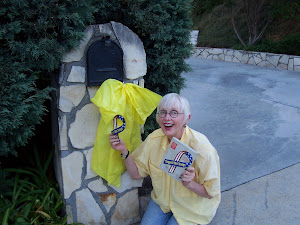
I bought my veteran husband a stars-and-stripe pinwheel at the 99 cent store to thank him for the time he put into the reserves and on call up for the Berlin crisis—the crisis that didn't turn into war. There are many vets like him who were willing to fight and their willingness was the reason we had no war. Our family has very few vets—it's a family of mostly women who lived before women were equals in the war efforts (though I know many were, in fact, very equal!). So today I'm remembering my uncle Jim Heatly, Navy, deceased; Douglas Howard, now in his 90s, Army, Pacific Theater; Robert W. McElroy, Air Force, a pilot who volunteered for WWII before conscription, deceased; my grandson @Travis Lamoureaux, father of one and one on the way, who served in the all volunteer Army in Iraq--twice; and, of course, @Lance Johnson, my dear husband who volunteered again right after 9/11 and was turned away because only young soldiers were needed or wanted—a big mistake in my opinion.


---
Carolyn Howard-Johnson wrote the foreword for Eric Dinyer's book of patriotic quotations, Support Our Troops, published by Andrews McMeel. Part of the proceeds for the book benefit Fisher House. Her chapbook of poetry won the Military Writers Society of America's award of excellence. Find it at http://www.amazon.com/gp/product/1599240173/. Her novel, collection of creative nonfiction and much of her poetry is informed by interest in leading the world toward acceptance of one another. Find her web page dedicated to tolerance at http://www.carolynhowardjohnson.redenginepress.com/tolerence_and_utah_links.htm. If your Twitter followers would be interested, please pass this on to them using this widget:

Sunday, May 11, 2008

How Iraq's Sand Is Like Iris--Mother's Day 2008


Below you will find the letter I sent to my grandson after receiving from him a bouquet of iris on Mother's Day. It seems very private but then it occurred to me that it is also very American, about generations and love and really, what our soldiers are doing over there or -- if that doesn't describe the way they're thinking about it now -- then it may be about what they thought they would be doing over there. He is serving in the tradition of his father, his grandfather, his Cousin Joe, his Great Uncle Bob, and Great Uncle Jim, and another Great Uncle he has never met, Doug. Veterans all.


Dear Travis:

How I loved the flowers on mother's day, though the sand you mentioned from Iraq's deserts--unblooming ones I must presume--would have been adequate. It's the thought.

As it turns out, the flowers were iris. So, if it's the thought that counts, they made me think.

Your great, great grandmother Ruth Howard (the one who is a main character in This is the Place) raised iris. Raising iris is different from planting iris or just having some in your yard. She had a patch of them just beyond the side yard where that huge Mormon family sat in Adirondack chairs. There were some 40s /50s style metal lawn chairs there, too, a tad rusted. And the clothesline. I think it was made so the ropes could be taken down during family parties but those ropes were supported by poles where wasps liked to build their nests. They were cozy homes for the wasps, hollow with nice little holes for them to ease into and out of. Good hiding places. One never saw the actual nests, only the comings and goings. Once I leaned against one of their entrances (or perhaps exits). Someone didn't like it much and he (or she) stung me in the armpit. That's the first time I noticed the holes were there. Before that they had just been good places to hang from your knees.

Anyway, beyond that yard, all nice and green and shaded by an apple tree that put out the bitterest, hardest, greenest apples of all time, was the iris patch. Beyond that the chicken coop. Chicken manure made very good fertilizer for the iris so it was nice and convenient. Grandmother putzed in that patch. She crossed iris with iris to see what she would get. A little pollen from this applied with her finger to the female organs of that. She also tried for size, I think, because her iris were huge, as big as the biggest California-grown grapefruit. And the colors. Some had mismatched petals, the top ones that curved up different from the ones that made a skirt. Some glittered in sun like mica. And not just the color of Van Gogh's irises. Oh, no. Much too plain. These came in pink and gold-orange, the color of sunsets. Blues and lavenders, the colors of Utah skies in summer.

Grandma liked to give tubers (for they are tubers, really, and not bulbs) to people who came to visit for she kept them nicely divided so they didn't lose any of their energy and life. By dividing them her iris she kept them forever young. It worked that way for Grandma, too. Because she was always busy and interested in something she remained feisty and fun until she died in her 90s. The olds woman in Hollday, Utah at the time.

Getting a tuber from Grandma was a treat. It was always a surprise the following spring to see what color would come of those roots that looked like giant rat turds. Grandma produced miracles with her iris.

You did, too. (-:

Love,
Grandma Carolyn

PS: You can see that iris have been influential in my life. The cover of one of my book's of poetry (co-authored by Magdalena Ball) is covered with iris, courtesy of an artist friend, Vicki Thomas.


-----

Carolyn Howard-Johnson wrote the foreword for Eric Dinyer's book of patriotic quotations, Support Our Troops, published by Andrews McMeel. Part of the proceeds for the book benefit Fisher House. Her chapbook of poetry won the Military Writers Society of America's award of excellence.

Tuesday, April 29, 2008

Horrifying Figures on the Cost of War:Mental Disease and Suicide

According to the May 5, 2008, issue of Time Magazine, the military established a suicide hotline for vets in August. An amazing 37,000 calls have been received so far.

Figures that support the need for this kind of service are also included in that issue of Time. An independent study (Rand) shows that "as many as 300,000 Iraq and Afghanistan war veterans suffer from symptoms of depression por post-tramatic stress disorder." That about 20%! And an additional 320,000 soldiers are are on the rolls as having experienced traumatic brain injury.

In former posts I've talked about the post active duty care our soldiers are getting. The picture does not look good.

-----
Carolyn Howard-Johnson wrote the foreword for Eric Dinyer's book of patriotic quotations, Support Our Troops, published by Andrews McMeel. Part of the proceeds for the book benefit Fisher House. Her chapbook of poetry won the Military Writers Society of America's award of excellence.

Thursday, March 20, 2008

Guest Blogs on Sunchon Tunnel Massacre Survivor


This little vignette is by Joyce Faulkner, author of Sunchon Tunnel Massacre Survivors. Historians have been neglecting the stories (and veterans!) of that war too long. Faulkner is out to rectify that!

When Pat Avery and I first met the nine men featured our new book, Sunchon Tunnel Massacre Survivors, we knew right away that they were special human beings. Oh sure, knowing their history made them interesting subjects. Being POWs in Korea almost 60 years ago is bad enough -- but these guys had survived the unthinkable -- a massacre. They'd watched their buddies fall to the ground, screaming for their mommas. They were shot, bayoneted, bludgeoned -- and left for dead with the bodies of their friends.

I wondered how the experience had effected them. I wondered how they dealt with their memories. I knew I'd respect them long before I met them. I already felt sorry for their ordeal. What I didn't expect was to care about them so much.

By the time that Pat and I finished Sunchon Tunnel Massacre Survivors, we knew more about sorrow, anger, hatred, hunger, and torture than we wanted. The aftermath was equally hard to bear. We heard about the times they'd screwed up -- the drinking, the fighting, the women, the difficulty they had in holding down jobs. The wives told us about their tempers, their troubled sleep, their jumpiness. I spent many a night sobbing over the manuscript for the boys these men had been.

However, there can be no up if there is no down. Hearing about the ugliness was the price that we paid to know these incredible people. We learned about grit and determination and spirit and hope. We saw that even after falling again and again -- these guys continued to get up and try. We learned how those qualities kept Ed and Bob and Jim and Walt and Valdor and Bill and Allen and Sherman and George alive in Korea -- and how they kept them reaching for happiness ever since their return.

This is a picture of me and Sherman Jones. He was the most seriously injured of the survivors during the massacre. He was shot in the face, side, and leg. One foot has been partially amputated. Sherman endured many surgeries on his face to give him some quality of life. He's very bright, but obviously there was some degree of brain damage and he gets over excited in exciting situations. He has no emotional brakes. When he's happy, he's happy..when he's mad, he's MAD..when he loves you, he loves completely. We call him the hugger and plan events with 15 minutes of welcoming hugs beforehand and 15 minutes of goodbye hugs at the end. We worry about him, love him and are grateful that he's still with us. He's a blessing...
------

Carolyn Howard-Johnson wrote the foreword for Eric Dinyer's book of patriotic quotations, Support Our Troops, published by Andrews McMeel. Part of the proceeds for the book benefit Fisher House. Her chapbook of poetry won the Military Writers Society of America's award of excellence.